
Tailoring Men Suit: A Guide to Perfect Fit and Style
Tailoring a men’s suit gives us control over fit, fabric, and design details that standard sizing cannot provide. We can shape the jacket and trousers around your proportions, creating a polished appearance that feels comfortable and moves naturally.
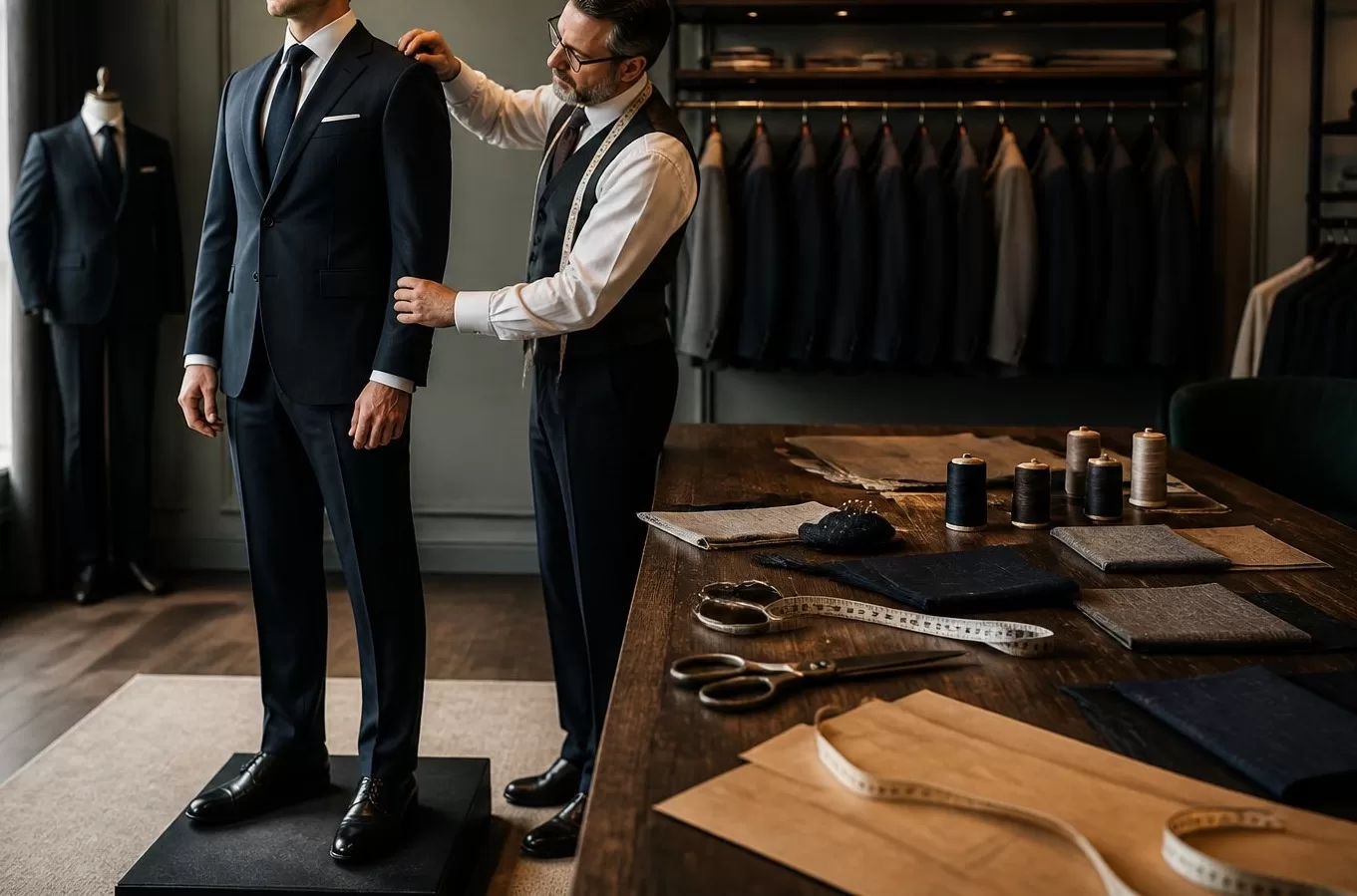
A well-tailored suit should fit your body’s proportions, use fabric suited to its purpose, and include details that reflect your personal style. We will explore how to select materials, shape key features, and personalize elements such as lapels, pockets, buttons, and trousers.
The process also includes careful fittings, precise alterations, and proper maintenance. These steps help us create a suit that looks refined, performs well, and remains useful for years.
Understanding Fit And Proportion
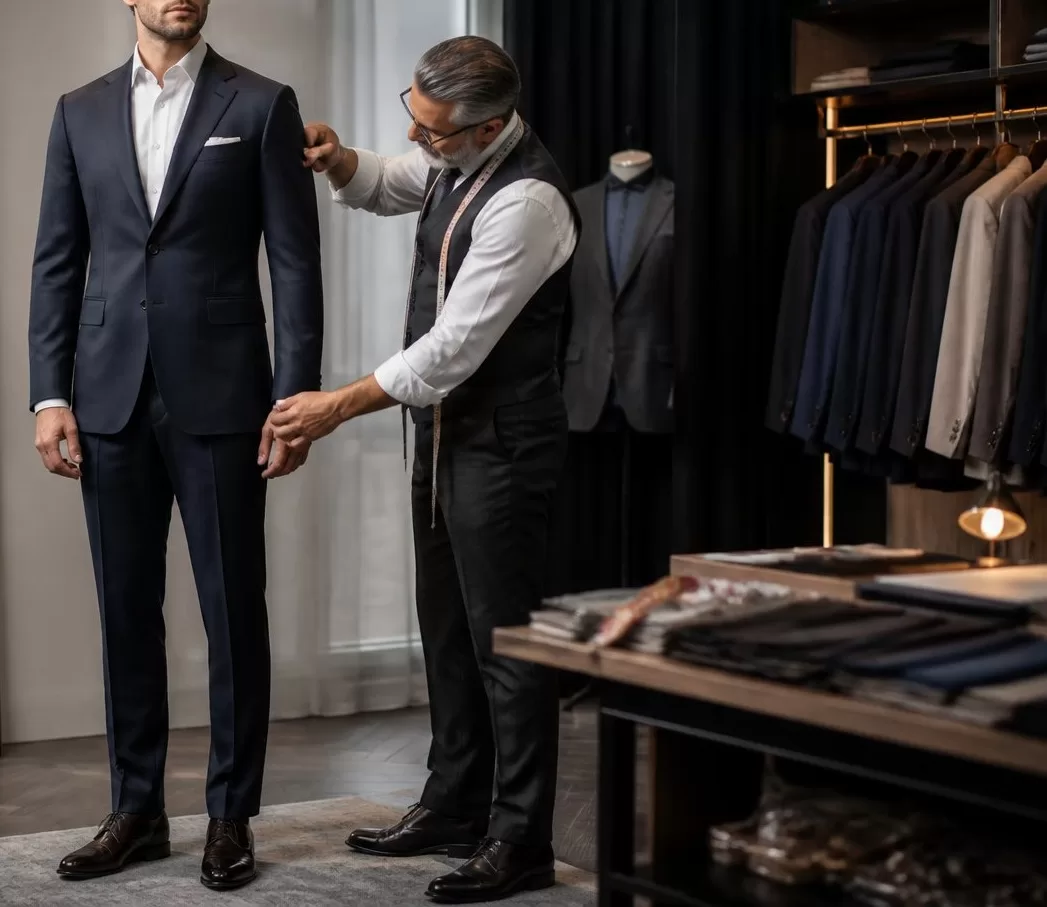
A well-tailored suit balances accurate body measurements, a suitable silhouette, and enough room for natural movement. We should judge the jacket and trousers together, since small differences in length, width, or rise can affect the entire appearance.
Key Body Measurements
We begin with the jacket’s shoulders, because this area has limited alteration potential. The shoulder seam should end where our shoulder ends, without extending past the arm or creating a divot near the sleeve head. The chest should lie flat when the jacket is buttoned, with no pulling across the lapels or horizontal strain lines.
The jacket waist should follow our shape without restricting breathing or causing the button to pull. Sleeve length usually works best when the cuff ends at the wrist bone and exposes roughly 1–2 cm of shirt cuff.
For trousers, we check the waist, seat, thigh, rise, and hem. The waistband should stay secure without a belt, while the seat should remain smooth and the rise should allow comfortable sitting. Trouser hems should create the intended break without pooling around the shoes.
Silhouette Selection
We choose a silhouette based on our proportions, movement needs, and the setting. Slim fits use narrower shoulders, a trimmer chest, and a more tapered trouser leg. They suit lean frames when the fabric remains smooth and does not restrict movement.
Modern or tailored fits provide moderate shaping through the chest and waist while retaining practical ease. This option works well for many body types and supports both professional and formal wardrobes.
Classic or relaxed fits use fuller proportions and less waist suppression. They can balance broader builds or provide greater comfort, but excess fabric should not create folds beneath the arms or along the trouser legs.
Jacket length also affects proportion. The hem should generally cover the seat and create a balanced relationship between the jacket and trousers. Shorter jackets can make the legs appear longer, while excessive length can make the body look compressed.
Ease And Mobility
Ease describes the space between our body and the garment. We need enough room to sit, reach forward, climb stairs, and fasten the jacket without distortion. A jacket that fits correctly while standing but pulls sharply when we move needs adjustment or replacement.
We test mobility by buttoning the jacket, crossing our arms, and raising them slightly. The fabric may show minor tension, but the lapels should stay reasonably flat and the armholes should not cut into the underarm. A higher armhole often improves movement without requiring a wider jacket.
For trousers, we sit and walk to check the rise, waistband, seat, and thigh. We should avoid tightness at the crotch and excessive fabric at the back of the knees. Tailors can adjust the waist, sleeve length, trouser hem, and sometimes the jacket body, but they cannot reliably correct shoulders or a fundamentally incorrect size.
Selecting Suit Fabrics
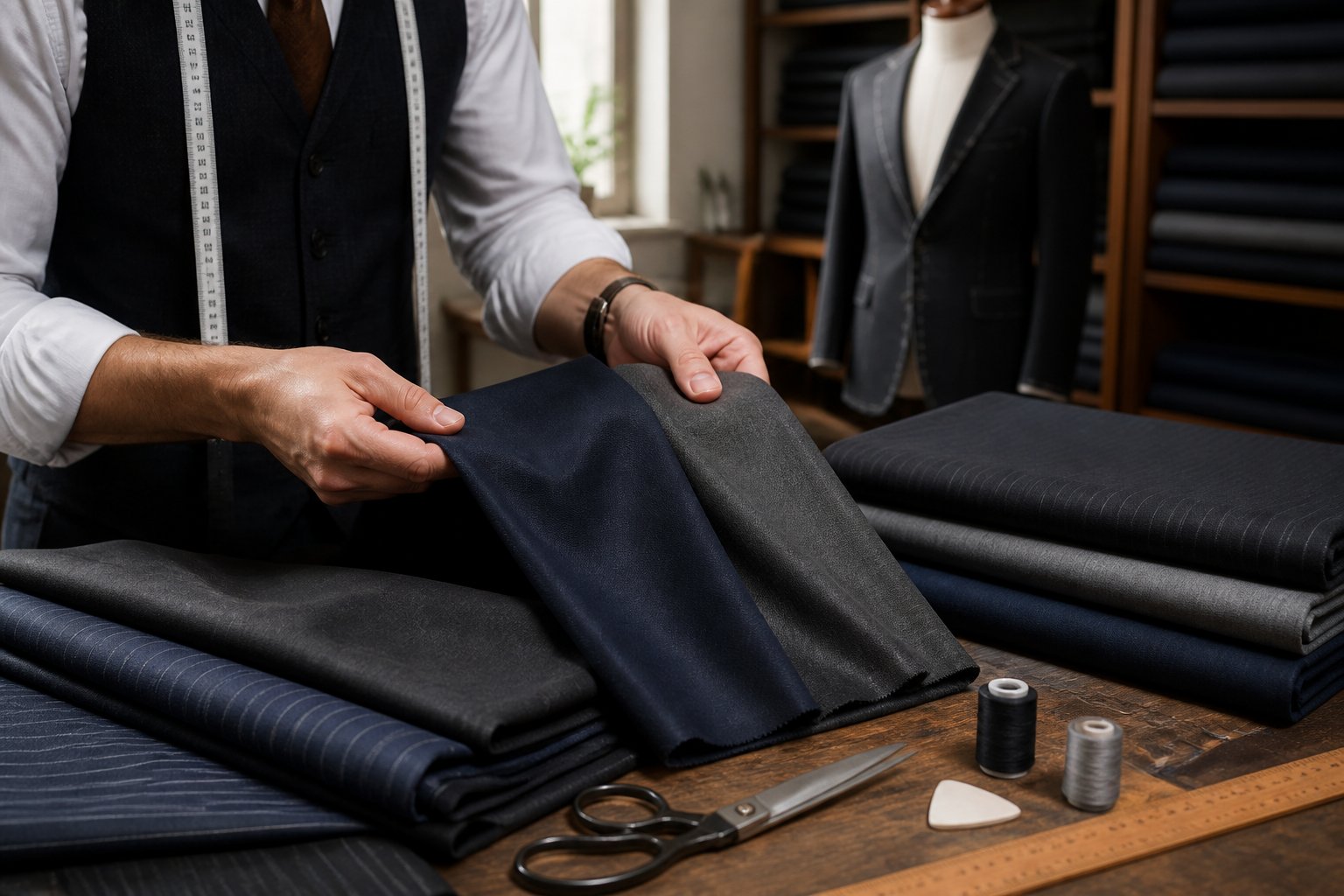
We choose suit fabrics according to climate, use, comfort, durability, and the level of formality required. Fiber content, fabric weight, weave, color, and pattern all affect how a tailored suit looks and performs.
Wool And Wool Blends
Wool remains a practical choice for most tailored suits because it resists wrinkles, regulates temperature, and holds its shape well. Merino wool feels smooth and works for business suits, while flannel provides a softer hand and a warmer appearance. Worsted wool has a clean surface and suits formal or professional settings.
Wool blends can add specific benefits. Wool blended with silk develops a subtle sheen and works well for evening wear, while a wool-cashmere blend feels softer but usually requires more careful storage and cleaning. Wool blended with synthetic fibers can improve crease resistance and reduce cost, although excessive synthetic content may reduce breathability.
We should judge quality by more than the Super number. Higher numbers indicate finer fibers, but a finer cloth may wear faster and need gentler care. A well-made medium-weight wool often offers a better balance of comfort, durability, and value.
Seasonal Fabric Weights
Fabric weight helps determine comfort throughout the year. For hot weather, we can choose lightweight wool, linen, cotton, or a cotton-linen blend. Linen provides excellent airflow but creases readily, while lightweight wool maintains a sharper appearance with better wrinkle recovery.
For cooler months, medium- to heavy-weight wool, flannel, and tweed provide greater insulation and structure. Flannel has a brushed surface that feels warm and soft, whereas tweed offers a more textured finish suited to casual tailoring and outdoor settings.
| Season or climate | Suitable fabrics |
|---|---|
| Hot and humid | Linen, cotton-linen, lightweight wool |
| Mild or changing weather | Medium-weight wool, wool blends |
| Cold weather | Flannel, tweed, heavy wool |
We should also consider indoor heating, travel, and how often we will wear the suit. A versatile medium-weight wool suit often works across several seasons in temperate climates.
Pattern And Texture Choices
Pattern and texture influence how formal and versatile a suit appears. Solid navy, charcoal, and medium gray provide the widest range of business and formal combinations. Subtle patterns, such as faint checks or narrow pinstripes, add interest without limiting shirt and tie options.
Texture can change the character of the same color. A smooth worsted wool looks formal and polished, while hopsack, birdseye, or subtle twill creates visual depth. Linen and cotton have a more relaxed appearance because their surfaces crease or show natural irregularities.
We should match pattern scale to our build and intended use. Small, understated patterns usually offer greater versatility, while bold checks or strong stripes make the suit more distinctive. For a first tailored suit, we typically favor a restrained pattern and a durable texture that works across professional and social settings.
Choosing Jacket Details
We should match lapels, buttons, and pockets to the suit’s formality, the wearer’s proportions, and the intended use. These details affect balance, comfort, and how easily we can wear the jacket across different settings.
Lapel Styles
Notch lapels suit most business and versatile suits. Their angled indentation creates a clean, understated appearance that works well on two-button jackets, office tailoring, and separate jackets.
Peak lapels point upward toward the shoulders. We can use them to give a jacket a more formal or structured appearance, especially for double-breasted suits, evening wear, and strong-shouldered designs. They can also add visual width to a narrow upper body.
Shawl lapels have a continuous rounded edge without a notch or peak. We normally reserve them for tuxedos and formal dinner jackets rather than business suits.
Lapel width should relate to our body and the jacket’s proportions. Medium-width lapels offer the most flexibility; very narrow or very wide versions create a stronger fashion effect. We should also check that the lapel lies flat against the chest without bubbling or pulling.
Button Configurations
A two-button jacket provides the most adaptable choice for business and smart-casual wear. We fasten only the top button, leaving the lower button open to preserve the jacket’s intended shape.
A one-button jacket creates a streamlined, formal look, commonly used for dinner jackets or contemporary tailoring. A three-button jacket gives more chest coverage and a traditional appearance, but its proportions must suit the wearer’s torso.
Double-breasted jackets use parallel rows of buttons and typically create a broader, more structured silhouette. We should confirm that the front closes comfortably without tension lines across the stomach or chest. Button stance also matters: a higher stance emphasizes the chest, while a lower stance lengthens the torso visually. Choose buttons that complement the cloth; horn or corozo suits business tailoring, while covered buttons suit formal evening wear.
Pocket Designs
Flap pockets provide the most practical and versatile option for everyday suits. The flap should lie flat, and we should keep it outside the pocket rather than tucking it in unless the design specifically calls for a more formal appearance.
Jetted pockets use narrow fabric-welt openings with no flap. Their clean lines suit tuxedos and formal jackets, though they offer less protection for pocket contents.
Patch pockets attach fabric directly to the jacket’s exterior. They create a relaxed, sporty effect and work well with unstructured jackets, cotton, linen, and separates.
We should also consider the breast pocket and ticket pocket. A straight breast pocket looks restrained, while a slanted pocket adds a little movement. The ticket pocket, positioned above one hip pocket, suits traditional or country-inspired tailoring but may look too detailed on a minimalist business suit. Keep pocket placement symmetrical and avoid overfilling the pockets, which distorts the jacket.
Designing Trouser Elements
We create trousers by balancing comfort, proportion, and the formality of the suit. Rise, leg shape, front treatment, and cuffs should work together with the jacket’s length, structure, and overall silhouette.
Rise And Leg Shape
The rise measures the distance from the crotch to the waistband. A mid-rise trouser usually suits modern two-piece tailoring, while a higher rise can lengthen the appearance of the legs and sit more securely at the natural waist. We should choose the rise according to body proportions, jacket length, and comfort rather than trend alone.
The waistband should sit smoothly without pulling, folding, or requiring a tight belt. The seat needs enough room for movement, but excess fabric creates a loose appearance. For the leg, we generally taper from the thigh toward the hem while preserving enough space to avoid clinging around the calf. A straight or lightly tapered leg often gives the cleanest result for business suits.
Pleats And Flat Fronts
Flat-front trousers create a streamlined appearance and work well with slimmer cuts. They require accurate fitting through the waist, seat, and thigh because they offer less fabric for movement. We should avoid making them excessively tight, as strain lines around the pockets and fly indicate insufficient room.
Pleated trousers add fabric at the front and can improve comfort when sitting or walking. Single pleats provide a restrained amount of fullness; double pleats create a roomier, more traditional shape. Pleats should lie closed while standing, with the crease falling cleanly down the leg. We pair fuller pleats with a moderate or higher rise and a balanced leg rather than an extremely narrow hem.
Cuff Preferences
Trouser cuffs, also called turn-ups, fold a band of fabric upward at the hem. They add visual weight and can balance a taller wearer, fuller trouser leg, or structured jacket. A cuff commonly measures about 1.5 to 2 inches, although its width should match the trouser’s scale and the wearer’s proportions.
We usually choose plain hems for formal business suits, tuxedo trousers, and very slim designs. Cuffs suit less formal wool suits and pair naturally with pleats, though they can also work on flat-front trousers. The hem should meet the shoe with a modest break; excessive fabric can make the cuff collapse, while too little break may expose the sock when walking.
Personalizing Style Features
We can shape a suit’s appearance through the lining, monogram, finishing details, and button materials. Each choice affects comfort, durability, formality, and how easily the suit works with the rest of our wardrobe.
Lining Options
We choose a lining based on comfort, climate, and the suit’s construction. Viscose and cupro linings feel smooth, breathe better than polyester, and allow the jacket to slide over a shirt without pulling. Polyester costs less and offers good durability, but it may feel warmer during extended wear.
A full lining gives the jacket a structured appearance and helps protect the outer fabric. A half or butterfly lining reduces weight and improves airflow, which suits warmer climates and lightweight fabrics. We should match the lining color to the suit for a conservative result or choose a restrained contrast for personal character.
Patterned linings add interest without changing the suit’s exterior. We should check that the lining does not create excessive bulk around the shoulders, sleeves, or vents.
Monograms And Finishing Touches
A monogram adds a personal mark, but placement matters. We commonly position initials inside the jacket, such as beneath the inner pocket or along the lining. This keeps the detail discreet and preserves the suit’s professional appearance. For a subtle finish, we can use thread that closely matches the lining; contrasting thread creates a more noticeable effect.
Finishing touches include pick stitching, lapel width, pocket style, and sleeve buttons. Pick stitching around the lapels and pockets gives a slightly more defined edge, while clean edges create a quieter look. Functional sleeve buttons offer tailoring flexibility, but they can make future alterations more difficult.
We should keep decorative details consistent with the suit’s purpose. A business suit benefits from restrained choices, while a wedding or evening suit allows more individual expression.
Button Materials
Button material influences both appearance and performance. Horn buttons offer natural variation, resist heat better than plastic, and suit most tailored jackets. Their irregular color and grain mean that no two buttons look exactly alike.
Mother-of-pearl buttons provide a hard, polished surface with subtle depth. They work well on warm-weather suits and refined jackets, but they can chip if handled roughly. Metal buttons create a stronger visual statement and generally suit blazers, naval-inspired jackets, or formal evening designs rather than conservative business suits.
Plastic buttons provide consistent color, reliable durability, and lower cost. We should select a size and color that balance the lapels and fabric: dark buttons blend into a formal suit, while lighter or contrasting buttons make the jacket appear more casual.
The Fitting And Alteration Process
A well-fitted suit depends on accurate measurements, careful evaluation of posture and movement, and controlled alterations. We should assess the jacket and trousers while standing, walking, sitting, and wearing the shoes and shirt intended for the suit.
Initial Consultation
During the first appointment, we discuss the suit’s purpose, preferred silhouette, fabric, and styling requirements. A business suit may need a more conservative shape, while formalwear often requires sharper proportions and cleaner lines.
We take measurements for the chest, shoulders, sleeve length, waist, seat, inseam, and rise. We also examine posture, including a forward shoulder, uneven shoulders, or a prominent back, because these details affect how the garment hangs.
We should bring the shoes, shirt, and typical belt or braces we plan to wear. The tailor then pins or marks areas that need adjustment, such as a loose jacket waist, long sleeves, excess trouser fabric, or a waistband that shifts during movement.
Before work begins, we confirm which changes the garment can support. Sleeve length, trouser hems, waist suppression, and jacket side seams are usually manageable, while major shoulder, chest, or jacket-length changes may be limited by the garment’s construction.
Basted Fitting
At the basted fitting, the tailor temporarily holds the garment together with loose stitches or pins. This stage allows us to evaluate the main structure before permanent stitching and pressing make changes more difficult.
We check that the jacket shoulders lie flat, the collar touches the neck without gaping, and the lapels rest smoothly against the chest. The front should close without pulling, while the jacket waist should follow the torso without creating diagonal wrinkles.
We also inspect sleeve pitch and length. The sleeves should hang naturally from the shoulders and reveal a small, consistent amount of shirt cuff. Trousers should sit securely at the intended waist, with the side seams vertical and the legs falling cleanly over the shoes.
We should move through normal actions during this fitting. Walking, sitting, buttoning the jacket, and raising the arms reveal restrictions that a stationary inspection can miss. The tailor records each adjustment and may schedule another fitting for structured or bespoke garments.
Final Adjustments
During the final fitting, we review the permanently altered suit after pressing. We confirm that the jacket retains its shape, the trousers hang evenly, and the fabric shows no new pulling, bubbling, or twisting.
Small refinements may include correcting sleeve length, balancing trouser hems, adjusting the waistband, or fine-tuning the jacket waist. We should wear the same type of shirt and shoes used during earlier fittings so the measurements remain consistent.
We inspect functional details as well. Buttons should fasten comfortably, pockets should lie flat, vents should remain closed when standing, and trouser hems should meet the shoes as requested. We also check the lining and stitching for loose threads or visible strain.
If the suit restricts movement or develops noticeable wrinkles, we should identify the problem before accepting it. A final minor adjustment is usually more practical than trying to compensate with posture or accessories.
Care And Long-Term Maintenance
We protect a tailored suit by controlling moisture, friction, heat, and unnecessary chemical cleaning. Proper storage, careful cleaning, and prompt repairs help preserve the fabric, structure, fit, and appearance.
Proper Storage
Hang the jacket and trousers on a wide, shaped hanger that supports the shoulders. Use a trouser hanger with a secure clamp or bar, and align the creases before storing the trousers. Avoid thin wire hangers, which can distort the jacket’s shoulder line.
Give the suit room to breathe in a cool, dry wardrobe. Keep it in a breathable cotton garment bag rather than sealed plastic, which can trap moisture and encourage mildew. Empty the pockets, remove accessories, and brush away surface dust before storage.
After wearing the suit, let it air for several hours before putting it away. Rotate suits between wears so the fabric and internal structure can recover. For long-term storage, protect the suit from direct sunlight, excessive humidity, moths, and crowded conditions.
Cleaning Guidelines
We should dry-clean a suit only when it needs thorough cleaning, not after every wear. Frequent solvent exposure and pressing can gradually affect fibers, color, and shape. Instead, brush the suit with a soft garment brush after use and spot-clean small marks according to the fabric-care label.
Allow light wrinkles to relax on a proper hanger. For persistent creases, use a steamer from a short distance and avoid soaking the cloth. Never press directly over the jacket’s lapels, pockets, or trouser creases without suitable protection; excessive heat can create shine.
Tell the cleaner about stains before treatment and identify delicate fabrics, fused components, or special finishes. We should clean the jacket and trousers together when professional cleaning becomes necessary, so both pieces maintain a consistent color and finish.
Repairs And Refreshing
Address loose buttons, open seams, frayed hems, and damaged lining promptly. Small defects can worsen through regular movement, especially around pockets, cuffs, armholes, and trouser seats. A tailor can replace buttons, reinforce stress points, repair lining, and restore hems while preserving the original proportions.
We should have the fit checked when the suit feels tight, pulls across the back, or hangs unevenly. Tailors can often adjust the waist, sleeves, trouser length, or jacket sides, but major alterations depend on available seam allowance.
For a pressed appearance, choose professional pressing when steaming cannot remove stubborn creases. A tailor can also refresh the suit’s shape without applying unnecessary heat or pressure to delicate cloth.