
Full Lining vs Half Lining vs Unlined Suits: Which Lining Should You Choose?
Estimated reading time: 8 minutes
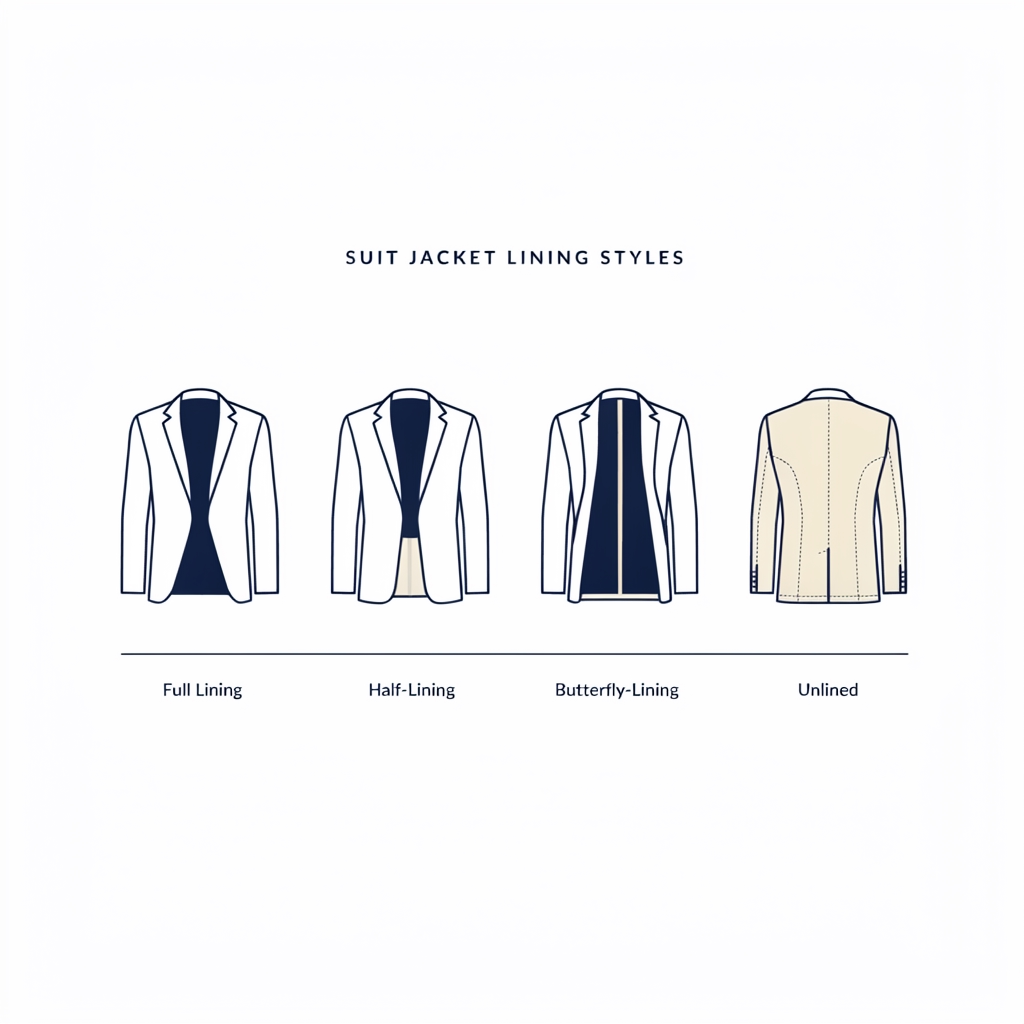
When most people shop for a bespoke suit, they focus on the fabric, the lapel, and the buttons. But there’s a decision hidden inside every jacket that affects your comfort more than almost anything else: the lining.
Choose wrong, and you’ll be sweating through an August wedding or shivering through a December boardroom. Choose right, and your jacket becomes comfortable in ways you feel every single time you put it on.
In this guide, we’ll break down the four lining structures — Full Lining, Half-Lining, Butterfly-Lining, and Unlined — so you can order your next custom suit with total confidence.
What Does Suit Lining Actually Do?
The lining is the layer of fabric sewn into the interior of your jacket. It serves several practical purposes:
- Protects the shell fabric from sweat and body oils, extending the life of your suit
- Reduces friction, letting the jacket glide smoothly over your shirt
- Hides interior seams and construction details for a clean finish
- Adds structure, warmth, and drape to the silhouette
How much of the jacket’s interior is lined — and how it’s finished — is where the four structures differ.
Full Lining: The Classic Choice
What it is: The entire interior of the jacket — body, sleeves, and back — is fully covered with lining fabric.
Why choose full lining
- Maximum durability. The lining acts as a protective barrier, shielding your expensive outer fabric from perspiration and wear. This is why formal suits and heavily-worn business suits are traditionally fully lined.
- Easier to put on and take off. The smooth lining slides effortlessly over shirts.
- A crisper, more structured silhouette. Full lining adds subtle body to the jacket, giving it the polished look expected in formal and corporate settings.
- Warmer — an advantage in autumn and winter, a drawback in summer.
Best for
Business suits, formal occasions, cooler climates, and anyone who wears their suit frequently and wants it to last years.
Half-Lining: The Breathable Middle Ground
What it is: The upper portion of the jacket — shoulders, upper back, and sleeves — is lined, while the lower back and side panels are left open with cleanly finished seams.
Why choose half-lining
- Dramatically better airflow. With the lower back open, heat escapes instead of trapping against your body.
- Lighter overall weight. The jacket feels less bulky, especially in softer fabrics.
- Visible craftsmanship. The exposed seams must be meticulously finished — a detail tailoring enthusiasts appreciate.
Best for
Spring and summer suits, commutes in warm climates, office wear in humid cities like Hong Kong, Singapore, or Bangkok.
Butterfly-Lining: The Connoisseur’s Detail
What it is: A refined variation of half-lining where the lining covers the shoulders and upper back, then splits open across the lower back in a shape resembling butterfly wings — hence the name.
Why choose butterfly-lining
- Signature look. When you take off your jacket, the butterfly opening reveals the interior architecture — an understated flourish that separates a considered garment from an off-the-rack one.
- Excellent ventilation while still protecting the high-friction shoulder area.
- A tailoring-house hallmark. Many high-end bespoke houses use butterfly linings as a quiet signature detail.
Best for
Clients who want something distinctive without going fully unlined — summer weddings, garden parties, and anyone who appreciates the details only insiders notice.
Unlined: The Ultimate Statement
What it is: No lining at all. Every interior seam must be individually taped, bound, or hand-finished — because there’s nothing to hide behind.
Why choose unlined
- Maximum breathability. Nothing between you and the fabric. In a linen or fresco suit, this is as cool as tailoring gets.
- Featherweight comfort. An unlined jacket feels dramatically lighter.
- Uncompromising craftsmanship. Every seam is on display. There is nowhere for a tailor to hide — which is exactly why unlined jackets often cost more than fully lined ones, not less. The finishing labour is significant.
Considerations
Less protection for the shell fabric, a softer and less structured drape, and sweat may show through on lighter fabrics. It’s a bold, confident choice best executed in casual or summer-oriented cloths.
Best for
Luxury casual suits, linen summer jackets, and clients who prioritise lightness and artisan detail above all.
Quick Comparison: Which Suit Lining Is Right for You?
How to Decide: Three Simple Questions
1. Where will you wear it? Boardrooms and winter weddings → Full Lining. Summer events and warm-climate offices → Half or Butterfly-Lining.
2. How important is longevity? If this suit will be in heavy rotation for years, Full Lining protects your investment best.
3. Do you want the interior to make a statement? Butterfly-Lining and Unlined turn the inside of your jacket into a talking point every time you hang it up.
Frequently Asked Questions
Is a half-lined suit better for summer? Yes. An open lower back dramatically improves airflow, making half-lining the most popular choice for warm-weather tailoring. For maximum coolness, choose unlined.
Why does an unlined jacket cost more than a fully lined one? Because lining can hide unfinished seams, while an unlined interior requires every seam to be individually bound and finished by hand — significantly more labour hours.
Can I change the lining structure of my suit later? No. The lining structure is determined during construction and cannot be altered after the jacket is made. It’s one of the most important decisions you’ll make when ordering.
What is a butterfly lining? A half-lining style where the back lining splits open in a butterfly-wing shape, revealing cleanly finished seams. It combines ventilation with a distinctive, high-end detail.
Should I match my lining fabric to the season? Absolutely — pair breathable construction (half, butterfly, or unlined) with lightweight fabrics like linen, fresco, or high-twist wool for summer, and full lining with flannel or tweed for winter.
Design Your Lining Structure
The lining of your jacket is where comfort, craftsmanship, and personal style meet. Now that you know the difference, why not see it for yourself?
In our custom suit designer, you can select Full Lining, Half-Lining, Butterfly-Lining, or Unlined — and pair it with over 800 fabrics, 300 lining cloths, and every lapel, button, and pocket style you can imagine.