
Full Canvas vs Half Canvas vs Fused: Which Suit Construction Should You Choose?
Estimated reading time: 8 minutes
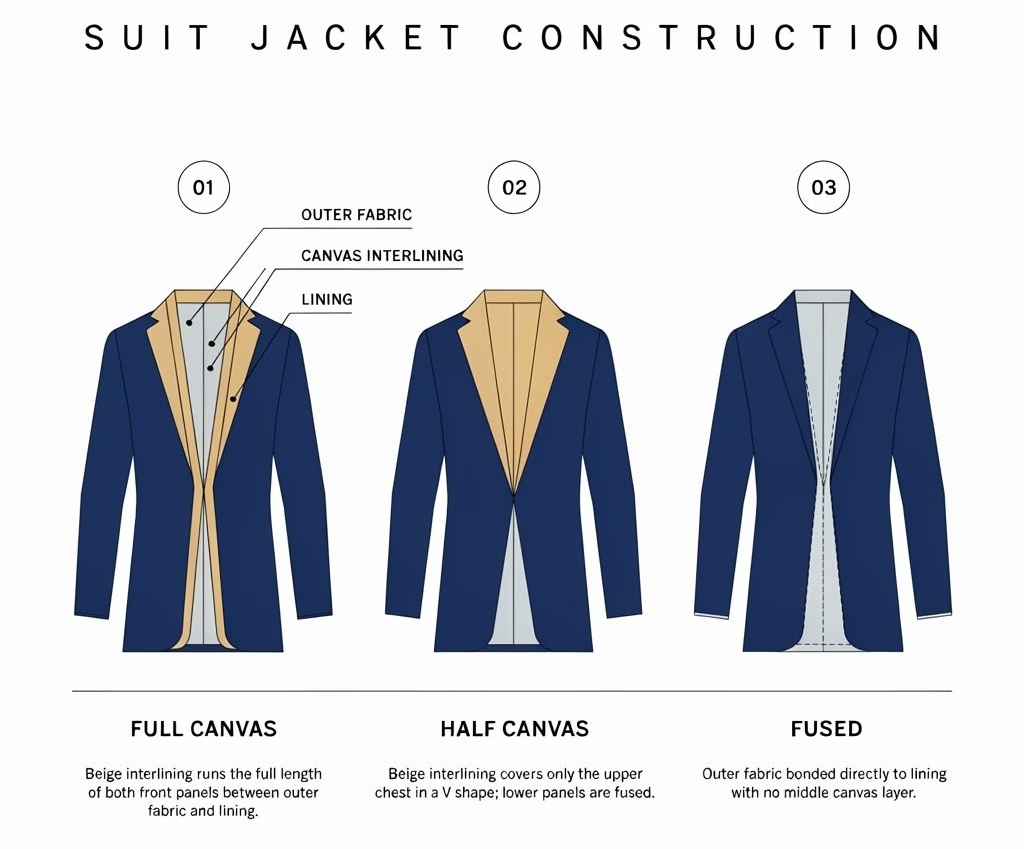
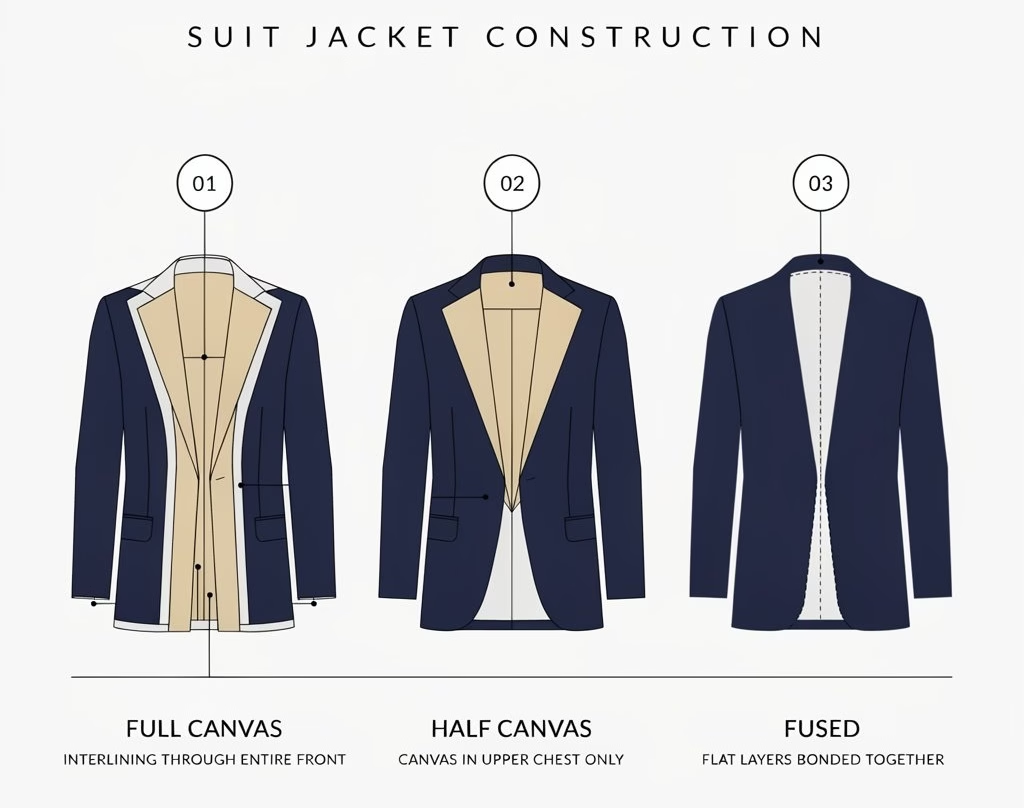
Two suits can use identical $200-per-meter wool and look nothing alike after six months of wear. One drapes like liquid, molding closer to your body every time you wear it. The other bubbles at the chest and stiffens after its third trip to the dry cleaner.
The difference isn’t the fabric. It isn’t the tailor’s skill. It’s something completely invisible from the outside: the construction method — specifically, what lies between your suit’s shell fabric and its lining.
If you’re investing in a custom suit, understanding the three construction types — Full Canvas, Half Canvas, and Fused — is the single most valuable piece of knowledge you can bring to the table. This guide gives you everything you need.
What Is Canvassing? Meet Your Jacket’s Skeleton
Every structured suit jacket contains an inner support layer called the canvass (or interlining). Traditionally made from horsehair and cotton woven together, this canvas layer sits between the outer fabric and the lining, giving the jacket:
- Its chest shape and gentle lapel roll
- Its ability to drape rather than flap
- Structural memory so the garment keeps its form over decades
How much of this skeletal layer a jacket contains — and how it’s attached — defines its construction type. There are three approaches, and they’re not created equal.
Full Canvas: The Gold Standard
What it is: A single piece of canvas runs through the entire front of the jacket, from shoulder to hem, suspended loosely between the fabric layers (“floating”) and secured with thousands of tiny hand stitches.
Why full canvas is the pinnacle
- It molds to your body. This is the magic of the floating canvas: through wear and body heat, the canvas gradually conforms to your posture and chest shape. A well-worn full-canvas suit fits you better after two years than on day one. No ready-to-wear garment can do this.
- Superior drape. The jacket moves as one living system. Fabric flows where fabric should flow.
- Longevity measured in decades. Without glue to fail, a full canvas jacket can be re-tailored and enjoyed for 20–30 years.
- The lapel roll. That soft, three-dimensional curve of the lapel — the unmistakable mark of fine tailoring — only comes from true canvassing.
Considerations
Highest cost and longer production time, which is precisely why it remains the hallmark of genuine bespoke workmanship.
Half Canvas: The Intelligent Middle Path
What it is: The canvas covers the critical upper zone — the chest and lapels, roughly down to the pocket line — while the lower front relies on lighter construction.
Why half canvas makes sense
- Retains the benefits where they matter. Your chest and lapels are where structure and drape count most. Half canvas delivers the shaping and roll exactly there.
- A lighter jacket. Removing the lower canvas makes the jacket feel airier — appreciated in warmer climates.
- More accessible price. You get authentic craftsmanship where it’s visible and felt, without paying for structure in areas that don’t need it.
Best for
First custom suits, business wardrobes, warm-climate professionals, and anyone who wants real construction quality at a rational price.
Fully Fused: The Mass-Market Method
What it is: No stitching at all. Instead, a layer of interlining pre-coated with adhesive is heat-pressed (“fused”) directly onto the shell fabric — essentially gluing the jacket together.
Where fused jackets come from
Almost all fast-fashion and department-store suits under typical price points are fused. It enables rapid, low-cost mass production.
The honest trade-offs
- Bubbling risk. Glue degrades — especially with repeated dry cleaning and humidity. When the adhesive fails, the interfacing separates from the fabric and creates visible puckering or bubbles across the chest. This damage is permanent.
- Stiff drape. Fused fronts move as a rigid panel rather than flowing naturally.
- No body-molding. The jacket never improves with wear; at best it stays neutral, at worst it deteriorates.
- Can feel hotter. Adhesive layers reduce breathability compared to stitched canvas.
To be fair
Modern fusing technology has improved, and a well-made fused suit can look sharp when new. For garments worn occasionally, fused construction represents reasonable value. But for a suit you intend to wear weekly and treasure — it’s simply the wrong foundation.
Quick Comparison
The 30-Second Test: How to Check Any Suit
Want to know what you’re wearing right now? Try the famous pinch test:
- Pinch the fabric just below the chest pocket area, separating the shell from the inside.
- Feel for layers:
- Three distinct floating layers you can slide between your fingers → you’re holding canvas
- Two layers glued rigidly together (you cannot separate them) → fused
- Check the lapel roll: Look at your lapel edge-on in a mirror. A soft, rounded roll suggests canvas; a dead-flat crease suggests fusing.
- Listen: Gently squeeze the chest. Quality canvas produces no sound; some fused jackets emit a faint crackle from dry adhesive.
Luxury stores hate this test. Use it freely.
Frequently Asked Questions
Is half canvas better than fused? Yes, unambiguously. Half canvas places real stitched structure exactly where it counts — chest and lapels — eliminating both bubbling risk and stiffness in the visible areas, at a moderate price.
Why are full canvas suits so expensive? You’re paying for rare skills (hand-padding the canvas takes hundreds of hours to master), slow production, and premium materials like horsehair canvas. But spread over a 25-year lifespan, a full canvas suit costs less per wear than replacing fused suits every four years.
Do all bespoke suits use full canvas? Traditionally yes — full floating canvas is foundational to bespoke philosophy. Some modern made-to-measure programs default to half canvas; always ask before ordering.
Can a fused suit be converted to canvas? No. It would require rebuilding the entire jacket front, which costs more than a new half canvas suit. Choose construction correctly the first time — you can’t upgrade later.
Does lining type matter too? Absolutely — canvas is the invisible skeleton; lining is the visible interior finish affecting breathability and comfort. Learn the difference in our guide to suit lining types.
Feel the Difference Yourself
Construction is what separates a garment worn from a garment inherited. Now that you know what lies beneath the fabric, choose accordingly.
In our custom suit configurator, pair world-class construction with over 800 fabrics, 300 linings, and every lapel, button, and pocket style imaginable — and watch your design come alive in real time.