
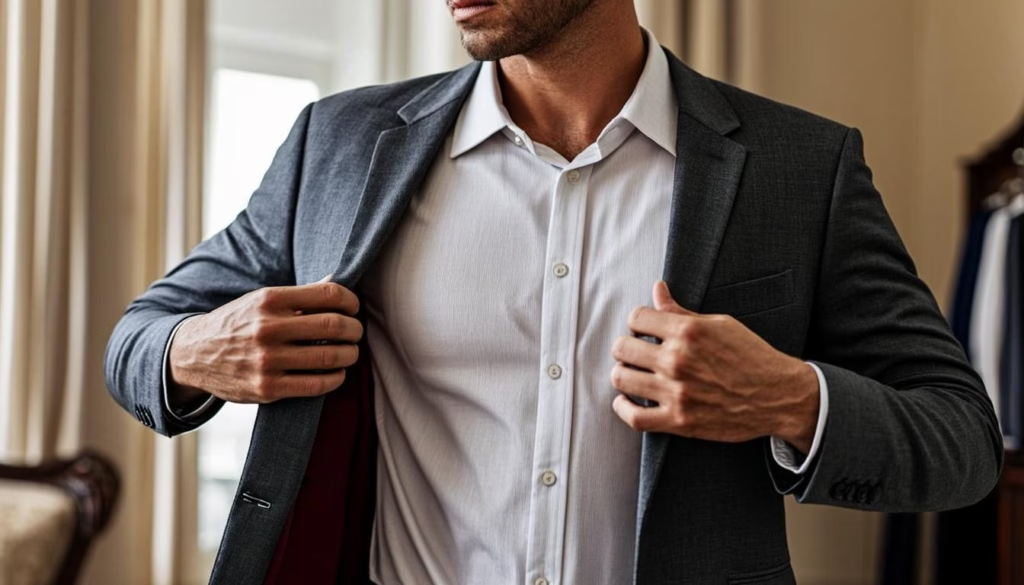
Most people spend hours choosing the cloth for a custom suit and seconds thinking about the lining. That is backwards. The lining is the layer your skin actually touches, and it changes how the jacket breathes, slides over your shirt, feels in summer heat and wears over the years. Here is how the main lining options differ — and how to choose for the suit you are designing.
What the Lining Actually Does?
A lining is not decoration. It serves four jobs:
- Structure and shape — it holds the interior of the jacket together and helps the garment slip on and off cleanly.
- Comfort — it covers the internal canvassing and seams so nothing rough touches your skin.
- Durability — cloth at stress points would wear against your shirt; the lining takes that friction instead.
- Temperature — a full wool lining adds warmth; an unlined or half-lined jacket breathes like a shirt.
Bemberg (Cupro):
Bemberg is the best-known brand of cupro lining, a fibre regenerated from cotton linter. It is the go-to lining for fine summer and year-round suits, and for good reason:
- Breathable and cool against the skin — it behaves closer to cotton than to synthetic fibre
- Smooth, with a soft matte sheen that slides easily over your shirt
- Anti-static, so it does not cling in dry weather
- Readily dyed, which is why you find it in dozens of shades — from understated grey to statement prints
For a made-to-measure suit worn in a warm climate, cupro/Bemberg is the safe and comfortable default. It pairs beautifully with linen and lightweight wools.
Viscose: The Budget Option
Plain viscose linings look similar to cupro at a glance but breathe less and wear faster. They keep the cost of a suit down, which has a place at lower price points — but when you are investing in made-to-measure tailoring, the small upgrade to cupro is worth it every time.
Wool and Half-Linings: The Cold-Weather Choice
A full wool lining adds real warmth, making it a considered choice for heavy winter suits and overcoats. Many tailors instead recommend the half-lined or unlined approach for warm months: the jacket interior is finished cleanly at the edges with no full lining at all, so the garment breathes like a shirt. With lightweight cloths such as linen, an unlined or half-lined jacket is the most comfortable way to wear tailoring in high summer.
How to Choose When You Design Online
Match the lining to how and where you will wear the suit:
- Year-round business suit in a temperate climate: cupro/Bemberg, in a colour that complements the cloth.
- Summer suit, weddings, travel: cupro, or a half-lined/unlined construction.
- Cold-winter suit: wool lining, or a heavier cupro with a warmer cloth.
- Statement maker: the lining is the one place a bespoke suit shows personality — a bolder print or colour is a private luxury only you and your tailor know about.
In the Solio Plus configurator, the lining step offers a wide palette of linings for every garment — jacket, vest and trousers — so the choice is yours at the exact moment you are looking at the cloth.
Start designing from a fabric brand, or explore the full range:
- Hesworth custom tailoring — jacket to 3-piece suit, linings configurable
- Caccioppoli fabrics — choose the cloth, then the lining
- Design studio
Frequently Asked Questions
Is Bemberg the same as cupro?
Bemberg is the trademarked brand of cupro lining made by Asahi Kasei. The terms are used interchangeably in tailoring — Bemberg is to cupro what Kleenex is to tissue.
Does the lining affect how a suit drapes?
Yes. A full lining adds a little weight and structure, which can improve how the jacket falls. An unlined or half-lined jacket drapes more softly and breathes more — the right choice depends on the cloth and the season.
Can I choose a different lining colour from the suit fabric?
Absolutely — it is one of the joys of made-to-measure. A contrasting lining turns every movement into a small detail worth noticing, while a matched lining keeps the garment quietly classic.